Simpler Recycling for Businesses: Workplace Compliance Guide
Updated for 2027
This Simpler Recycling guide was reviewed in September 2026 and reflects the upcoming 31 March 2027 deadline for micro-firms. It also covers the government’s announced delay to mandatory plastic-film and flexible-packaging collections, now intended to begin on 1 April 2030.
Simpler Recycling is already in effect for businesses and organisations in England with 10 or more full-time-equivalent employees. From 31 March 2027, micro-firms with fewer than 10 full-time-equivalent employees must also comply with the workplace recycling requirements.
This Simpler Recycling guide explains which deadlines apply to your organisation, what waste must be separated, how the rules are enforced and what you need to do to prepare. It also explains how DCW can help businesses across the South West introduce practical, compliant waste collections.
What is Simpler Recycling?
Simpler Recycling is a waste legislation reform designed to improve recycling across England by standardising collections and sorting, ensuring fewer recyclable materials enter general waste and reducing contamination within recycling collections – with the ultimate aim of reducing waste sent to landfill and supporting the environment.
The workplace requirements came into effect on 31 March 2025 for businesses and organisations with 10 or more full-time-equivalent employees. Micro-firms with fewer than 10 full-time-equivalent employees must follow the requirements from 31 March 2027.
However, micro-firms are encouraged to adapt their waste processes before the deadline to ensure they are ready to comply.
What are the key Simpler Recycling dates?

31st March 2025
Businesses, charities and public-sector organisations in England with 10 or more full-time-equivalent employees became required to separate dry recycling, food waste and general waste before collection.
31st March 2026
Household Simpler Recycling requirements took effect in England, including the introduction of weekly food-waste collections, subject to limited transitional arrangements.
31st March 2027
Micro-firms with fewer than 10 full-time-equivalent employees must comply with the workplace recycling requirements.
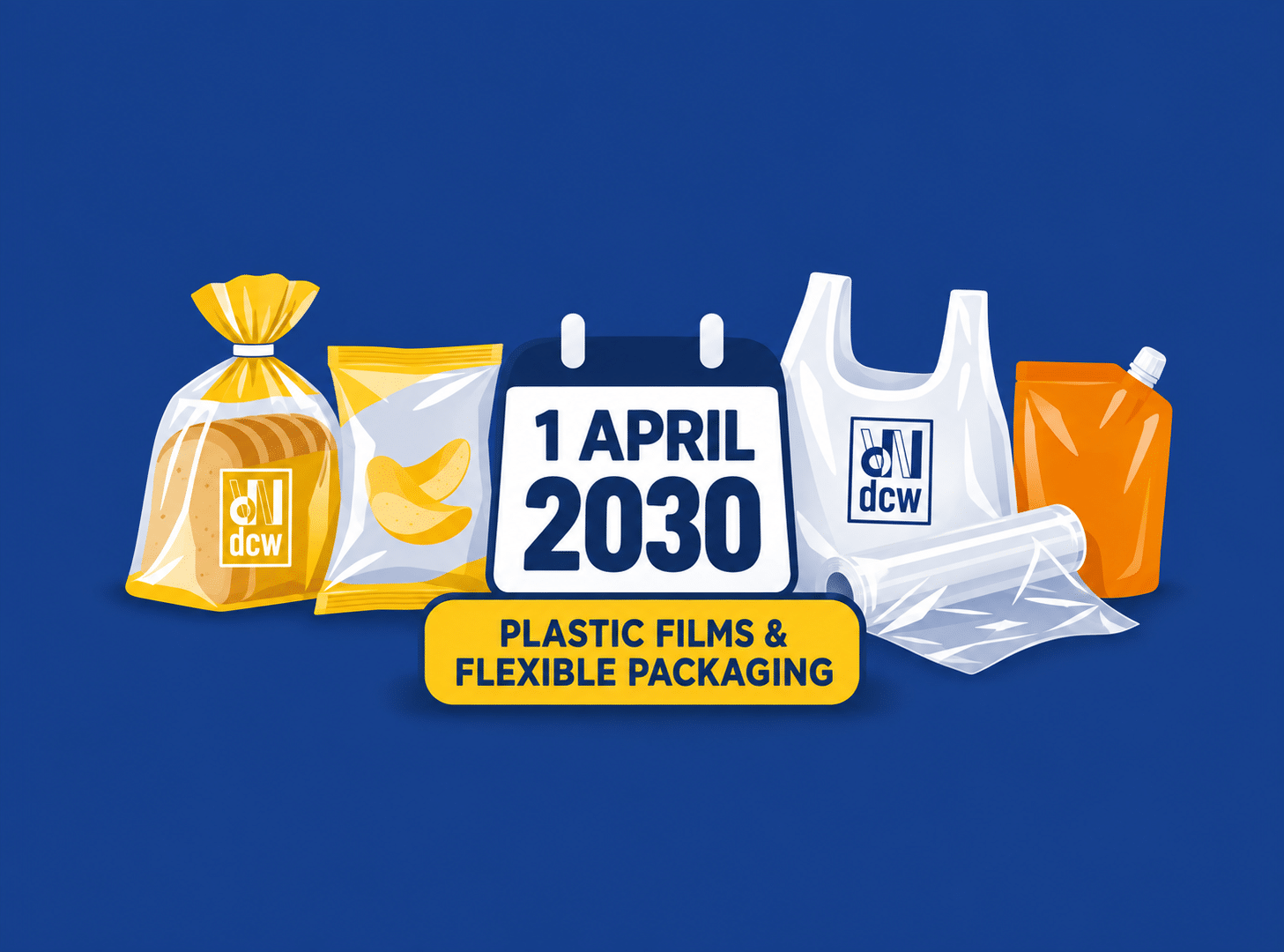
NEW: 1st April 2030
Mandatory collection of plastic films and flexible packaging from workplaces and households is now intended to begin on 1 April 2030.
How waste sorting is changing for businesses
Businesses and organisations with 10 or more full-time-equivalent employees have been required to comply since 31 March 2025. Micro-firms with fewer than 10 full-time-equivalent employees must comply by 31 March 2027.
Simpler Recycling standardises how recyclable materials are collected and sorted, so that the same core materials are recycled across England, whether you’re at home or at work. While the principles are similar, the timelines and responsibilities differ for households and businesses.
For businesses, Simpler Recycling introduces clear legal requirements for how waste must be sorted.
To comply, your business may need to:
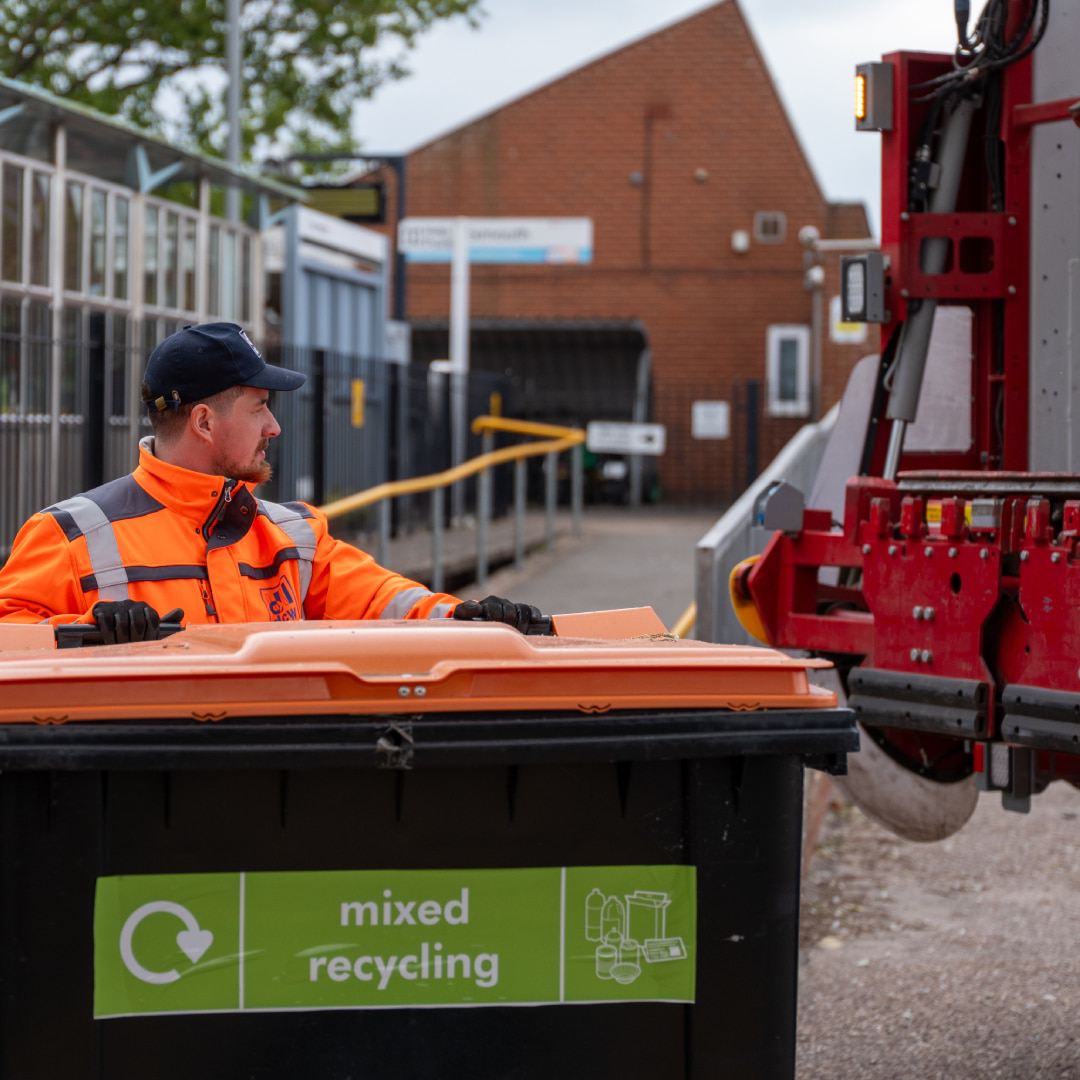
- Separate dry recyclable materials, food waste and general waste before collection
- Use suitable containers for the waste streams your workplace produces
- Ensure staff understand and follow the correct waste-sorting system
- Include waste produced by customers and visitors
- Work with a registered waste carrier that supports Simpler Recycling compliance
What businesses are impacted by Simpler Recycling?
Simpler Recycling applies to businesses, charities and public-sector organisations in England. Organisations with 10 or more full-time-equivalent employees are already required to comply, while micro-firms with fewer than 10 full-time-equivalent employees must comply from 31 March 2027.
Workplaces covered by the requirements include, but are not limited to:
- Offices
- Retail and wholesale businesses
- Hospitality businesses, including cafés, restaurants, pubs and hotels
- Holiday parks, campsites and short-term holiday accommodation
- Entertainment and sports venues
- Temporary events, festivals and showgrounds
- Transport and storage businesses
- Warehouses, factories and workshops
- Construction sites
- Agricultural premises
- Schools, colleges and universities
- Healthcare premises and care homes
- Charities and charity shops
- Places of worship
- Penal institutions
- Residential hostels
- Premises used mainly for public meetings
Which waste streams are included within the Simpler Recycling legislation?
Under Simpler Recycling, workplaces must separate food waste and recyclable materials from general waste before collection, including:
- Glass packaging including bottles and jars
- Steel and aluminium tins and cans
- Steel and aluminium aerosols
- Aluminium foil
- Aluminium food trays
- Steel and aluminium jars and bottle lids
- Aluminium tubes
- Plastic bottles made of polyethylene terephthalate (PET, including amorphous, recycled PET), polypropylene (PP) and high-density polyethylene (HDPE)
- Pots, tubs and trays made of PET (including amorphous, recycled and crystalline PET), PP (including expanded PP) and polyethylene (PE)
- PE and PP plastic tubes larger than 50mm x 50mm
- Cartons for food, drink and other liquids, including aseptic and chilled cartons
- Plastic-film packaging and plastic bags made of mono-polyethylene (mono-PE), mono-polypropylene (mono-PP) and mixed polyolefins PE and PP, including those metallised through vacuum or vapour deposition. Mandatory collection of these materials is now intended to begin on 1 April 2030.
Plastic packaging should be empty and rinsed where necessary to prevent contamination. Contact us / your current waste provider for more details and clarity.
ALL paper and card, aside from:
- Paper and card that contain glitter or foil
- Paper that is laminated
- Stickers and sticky paper
- Padded lined envelopes
- Paperback and hardback books
- Wallpaper
- All food intended for human or household pet consumption
- Biodegradable material resulting from the processing or preparation of food, including inedible food parts such as bones, eggshells, fruit and vegetable skins, tea bags and coffee grounds
How DCW ensures businesses across Devon are compliant with Simpler Recycling
Step one: Provide you with an informative Simpler Recycling Guide to help you understand the legislation, and how and when it will impact your business!
Step two: We carry out waste audits to ensure you have the bins you need, compliant with local and national regulations, and aligned with how much waste you produce.
Step three: We help ensure you’re compliant on-site, and take care of everything else downstream so you know your waste is being handled, sorted, and recycled in the right way.
We’re passionate about helping businesses across the South West with their commercial waste requirements, from legislative compliance to streamlined waste management and eco-efficiency.
It’s what we do.
Contact the Experienced
Team at DCW
Contact DCW for a cost effective and sustainable waste management solution. For a no obligation quote complete the form or call today on:
For service enquiries please speak to your local depot.
Opening hours:
Our phone lines are open during these hours
Monday to Friday 8.00am to 5.30pm
Your Simpler Recycling FAQs
Simpler Recycling is a set of reforms introduced to standardise workplace and household recycling collections across England. Its purpose is to make recycling clearer, reduce contamination and prevent recyclable materials and food waste from being placed in general waste.
For workplaces, the rules require relevant waste streams to be separated before collection so that they can be recycled or composted.
Micro-firms must comply with the workplace recycling requirements by 31 March 2027.
Businesses and other workplaces with 10 or more full-time-equivalent employees have already been required to comply since 31 March 2025.
A micro-firm is a business or organisation with fewer than 10 full-time-equivalent employees across the whole organisation.
Micro-firms do not need to register or apply for the temporary exemption, but they must comply with the relevant requirements by 31 March 2027.
Part-time employees are counted as a proportion of a full-time role, based on the hours they work.
Volunteers, contractors and self-employed workers are not included when calculating the number of full-time-equivalent employees.
No. The threshold is calculated across the whole business, rather than separately for each workplace.
For example, a company with three locations and five employees at each location would have 15 employees in total. It would therefore not qualify as a micro-firm, and the recycling requirements would apply at all three locations.
Workplaces must separate the following main waste streams before collection:
- Dry recyclable materials, including paper, cardboard, plastic, metal and glass
- Food waste
- Non-recyclable or residual waste
Businesses that generate garden waste must also arrange for it to be recycled or composted where this provides the best environmental outcome.
Specialist materials such as hazardous waste, electrical equipment and batteries require appropriate collections and must not be placed in standard recycling bins.
Yes. The food-waste requirements apply even if a workplace does not prepare or serve food.
Office food waste can include tea bags, coffee grounds, fruit peel, leftovers and food brought into the workplace by employees or visitors. Employees should not be asked to take workplace food waste home for disposal.
No. The requirements apply regardless of how little food waste a workplace generates.
Even small quantities, such as tea bags, coffee grounds, fruit peel and lunchtime leftovers, must be kept separate from dry recycling and general waste.
Not necessarily. Food waste must be kept separate from dry recycling and general waste, but some dry recyclable materials can be collected together where the collection arrangement is compliant.
Paper and cardboard must be collected separately from plastic, metal and glass by default. However, a waste collector may collect these materials together where it has completed the required assessment and established that separate collection is not technically or economically practicable, or would provide no significant environmental benefit.
DCW can assess the waste produced at your premises and recommend an appropriate combination of containers and collections.
The appropriate collection arrangement will depend on the service provided by your waste collector and the types and volumes of glass produced.
Glass bottles and jars must be separated from food and general waste. DCW can advise whether your glass can form part of an assessed recycling collection or requires its own dedicated container.
Yes. The government has announced its intention to delay mandatory collections of plastic films and flexible packaging from 31 March 2027 to 1 April 2030.
The revised date is intended to apply to both workplaces and households. It covers materials such as bread bags, crisp packets, wrapping film and carrier bags. The regulations are expected to be formally amended to reflect the new timetable.
This delay does not change the 31 March 2027 deadline for micro-firms to separate food waste and the other core recyclable materials.
The Environment Agency can investigate a workplace that is not separating its waste correctly and issue a compliance notice.
A notice may be issued to the business producing the waste or, where relevant, to a landlord, facilities management company or waste collector responsible for presenting or collecting it. Failing to comply with a compliance notice is an offence and may result in enforcement action.
A business will not automatically receive a fixed fine because an individual item has been placed in the wrong bin. However, persistent or material non-compliance can lead to a compliance notice from the Environment Agency.
Failing to comply with that notice is an offence and can result in enforcement action and financial penalties. Non-compliant businesses and other relevant premises may also be charged for the Environment Agency’s regulatory work.
The Environment Agency is responsible for regulating workplace compliance with Simpler Recycling in England.
It can investigate reports of non-compliance, inspect waste arrangements and issue compliance notices where a business, workplace or private waste collector is not meeting its legal responsibilities.
Responsibility depends on how waste services are managed at the premises.
If a landlord or facilities management company arranges waste collections on behalf of occupiers, it may be responsible for presenting the waste correctly. However, businesses still have a duty to ensure their commercial waste is stored, transferred and disposed of safely and legally.
Businesses should confirm responsibilities with their landlord and make sure the collection arrangements cover all required waste streams.
Waste produced by customers and visitors is covered by the workplace requirements.
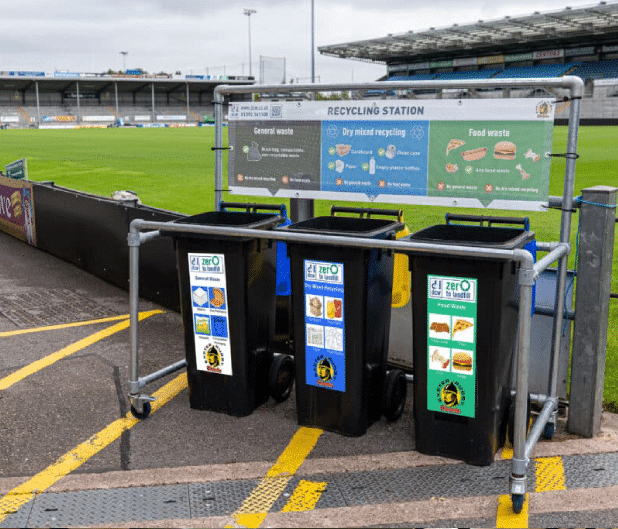
If a business provides public or customer-facing bins, it must ensure recyclable materials and food waste are separated before collection. Providing clearly labelled recycling and food-waste bins in the places where waste is generated can make this much easier.
Recycling becomes contaminated when incorrect items are placed in a recycling container or when recyclable packaging contains too much food or liquid residue.
Businesses should use clear signage, position bins together and monitor recurring contamination. A waste collector may refuse heavily contaminated recycling or charge for it as non-recyclable waste. The Environment Agency can also consider contamination when assessing whether a workplace is complying with the rules.
Start by confirming your total number of full-time-equivalent employees and auditing the waste generated across every business location.
You can then identify the required waste streams, arrange suitable containers and collections, introduce clear signage and explain the new system to employees. Preparing early can reduce contamination, avoid rushed changes and ensure the right services are in place before 31 March 2027.
DCW can carry out a waste audit to identify what your business produces, where waste is generated and which materials currently enter general waste.
We can then recommend suitable containers, collection frequencies and recycling services for your premises. We will also help you introduce a practical system that supports compliance while minimising disruption, contamination and unnecessary general waste.
What our customers say
We are proud that so many of our customers come back to us every time for all their commercial waste disposal needs. You can find out more about what our customers think below.